3 Reasons Dryer Fires Start With The Lint You Cannot Reach(Nearly 14,000 Home Fires A Year, And The Leading Cause Officials Name)

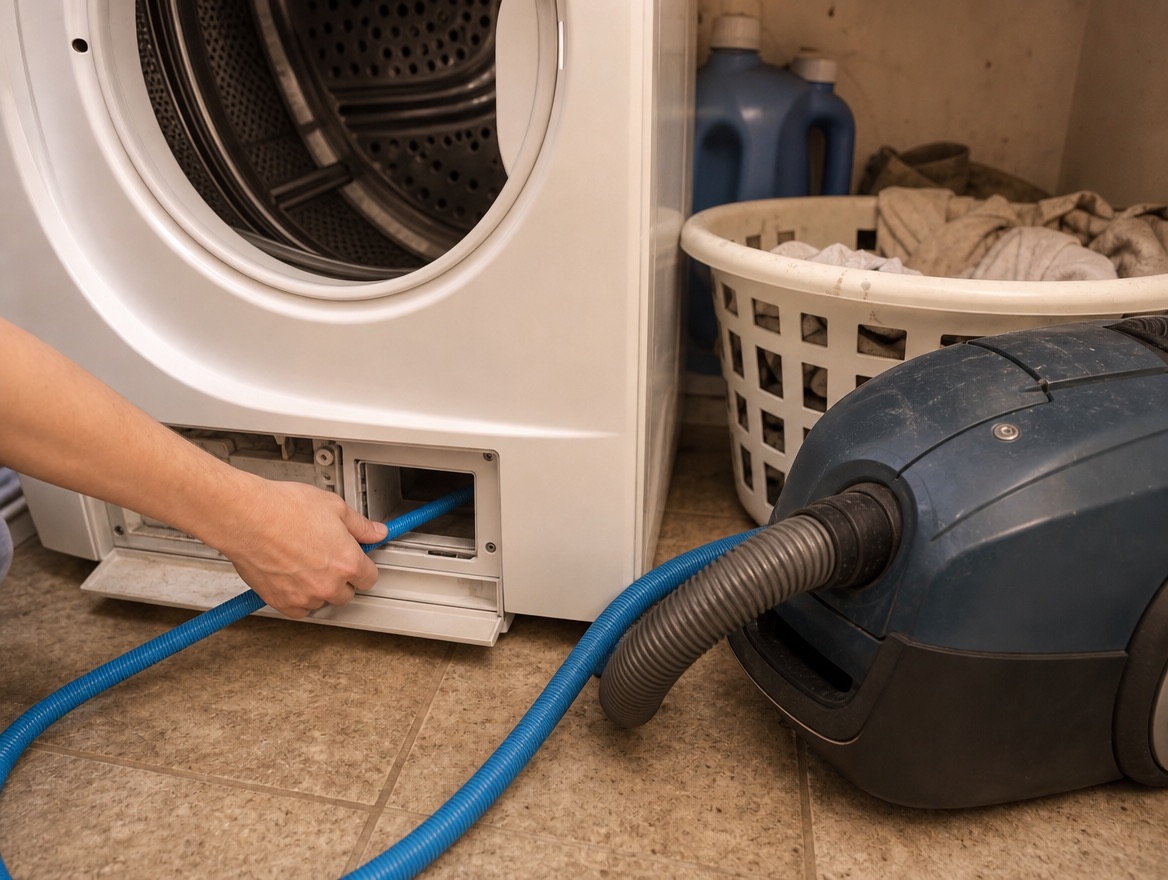
Up to 60% off. 60-day money-back guarantee. Uses the vacuum you already own. Deep Reach is a flat, flexible hose with a stretch sleeve and a set of brushes. The hose connects to a household vacuum and enters the narrow cavity under a removable dryer lint screen. It cleans that cavity and the reachable near section behind the machine. It does not clean the complete exhaust run and does not replace professional service.
You clean the lint screen. Every load, or near enough, and you have done it for years without thinking about it. It is the one piece of appliance maintenance almost everybody actually keeps up with, which is exactly why it is worth knowing what it does and does not cover.
The advice you have been given stops there. Clean the screen, check the vent hose behind the machine once in a while, call somebody every few years if you think of it. Nothing in that routine ever mentions the part of the dryer the routine cannot reach.
There is a narrow cavity directly below the screen, and it is where the material that gets past the mesh ends up. Three reasons that space matters more than the one you have been cleaning. Here they are.
1. The lint screen is a filter, not a seal
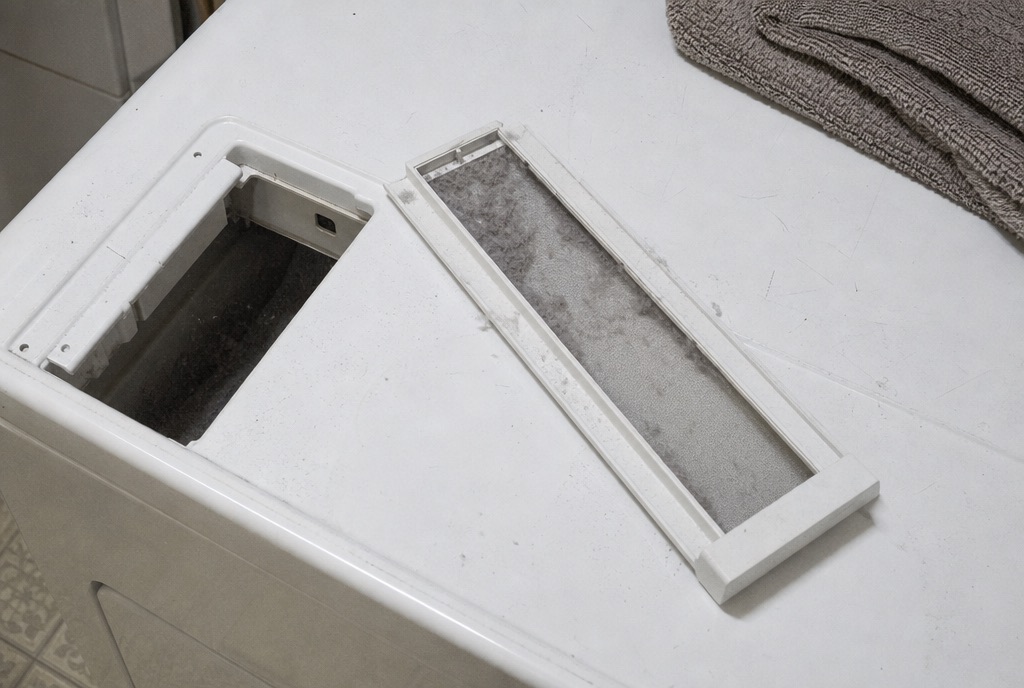
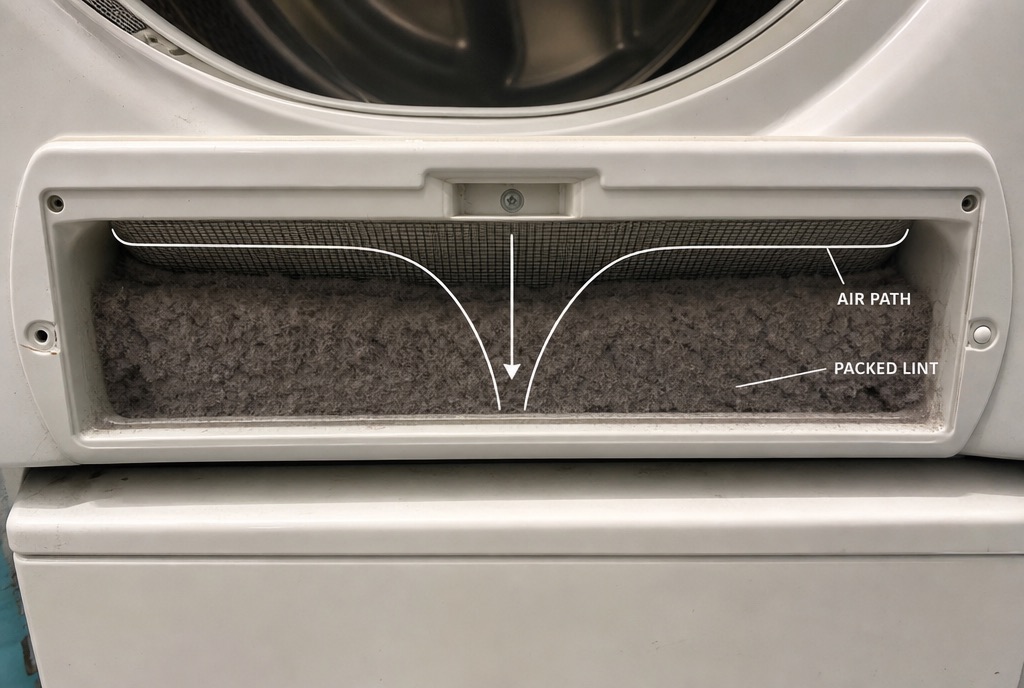
Pull the screen out and look down into the slot it came from. Whirlpool, Maytag, LG, Samsung, GE. They all have one. A narrow cavity with no drain, no access panel, and no opening wide enough to get a hand into. The mesh catches what mesh can catch. The finer material goes straight past it and settles down there, a little more with every load.
You did not skip a step and you have not been doing it wrong. Your dryer was built with a space nobody was given a way to clean. Which means the lint that matters most is the lint you have never once been able to look at.
2. A clean lint screen is not the same as a clean dryer
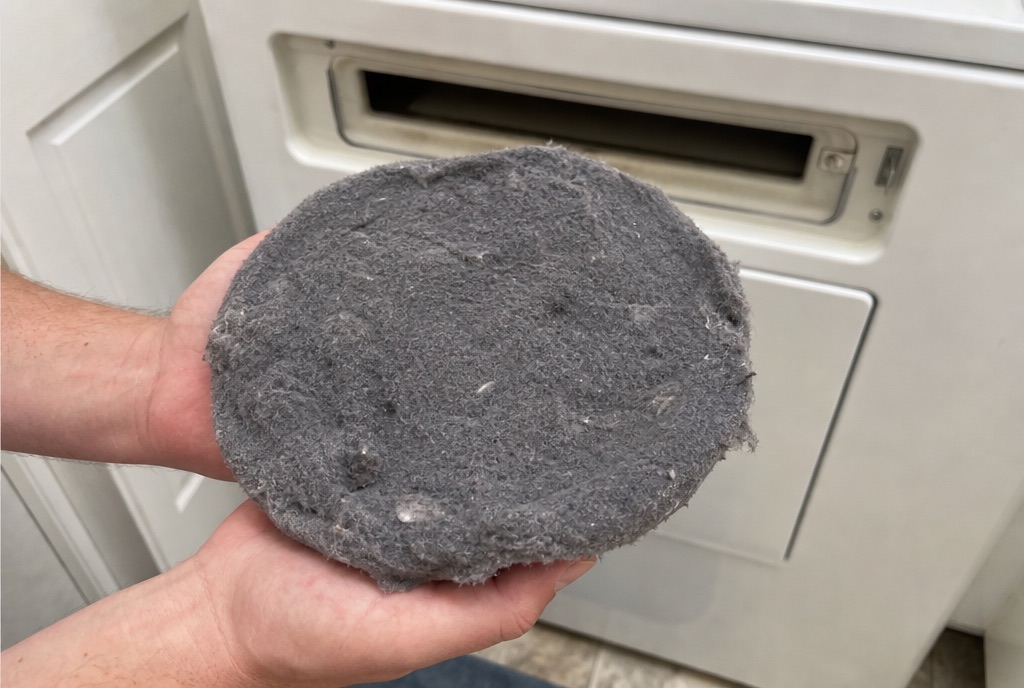
This is the part that catches people out, because the habit is a good one. You clean the screen after every load, so the machine reads as maintained. But the screen is the only part of the path the manufacturer gave you access to, and it is not the part the official guidance is worried about.
The U.S. Consumer Product Safety Commission puts it plainly: lint buildup can restrict airflow, create excessive heat, and result in a fire in some dryers. Not lint on the screen. Lint that has built up. And the buyers who finally look underneath tend to arrive at the same sentence. “I thought I kept my dryer pretty clean” is one of them, written before the first pass rather than after it.
3. Nearly 14,000 dryer fires a year, and the leading cause is not a broken machine
NFPA estimates 13,820 home structure fires a year involved clothes dryers between 2014 and 2018. The U.S. Fire Administration reports that failure to clean was the leading factor contributing to ignition in 31% of home clothes-dryer fires from 2018 to 2020, and NFPA attributes 32% to the same cause. That is not most of them. It is the single largest named cause, and it is the only one on the list that is housework.
Which reframes what is sitting in that cavity. It is not dirt. It is dry, loose, combustible fibre, packed into the warmest part of an appliance that runs for hours a week, in the one spot the design does not let you reach.
The fix was never a better brush. It was putting your vacuum somewhere it has never been.
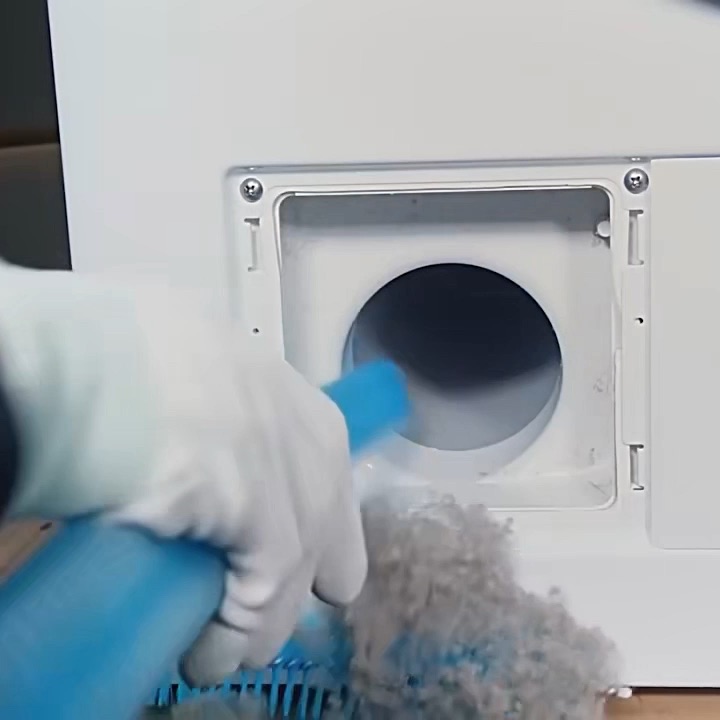
Deep Reach does not add power. Your vacuum already has more suction than any tool you have pushed into that slot, and it has had it the whole time. What the kit adds is the shape. The flat hose is thin enough to enter the lint-screen slot and flexible enough to follow the bend a rigid tool stops at, and the stretch sleeve is what holds that connection tight on your own vacuum hose while it pulls.
What that actually does to the three reasons above
- Reason 1 said the cavity was built without access. The flat hose is the access. It follows the slot and the bend instead of stopping at them.
- Reason 2 said a clean screen is not a clean dryer. This cleans the part the screen was never covering.
- Reason 3 said what is down there is dry combustible fibre. Suction takes it out of the house instead of moving it deeper, which a brush alone cannot do.
- No disassembly. Unplug the dryer, pull the screen, feed the flat hose into the slot, and run the vacuum you already own.
- It has a boundary and we will name it. The cavity and the reachable near section are yours. The complete exhaust run and the chassis are a professional's.
- 60 days to run it on your own dryer and see for yourself what comes out of it.
What Comes Out, And What It Does
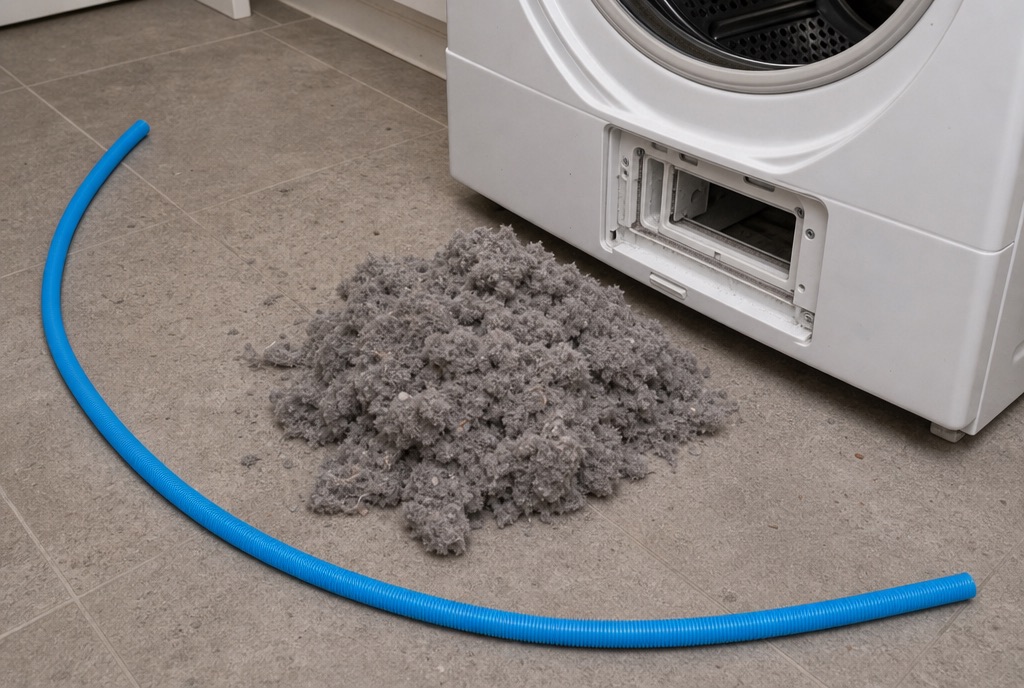
Removed lint held to a flame, and one pass under the screen of an ordinary dryer.
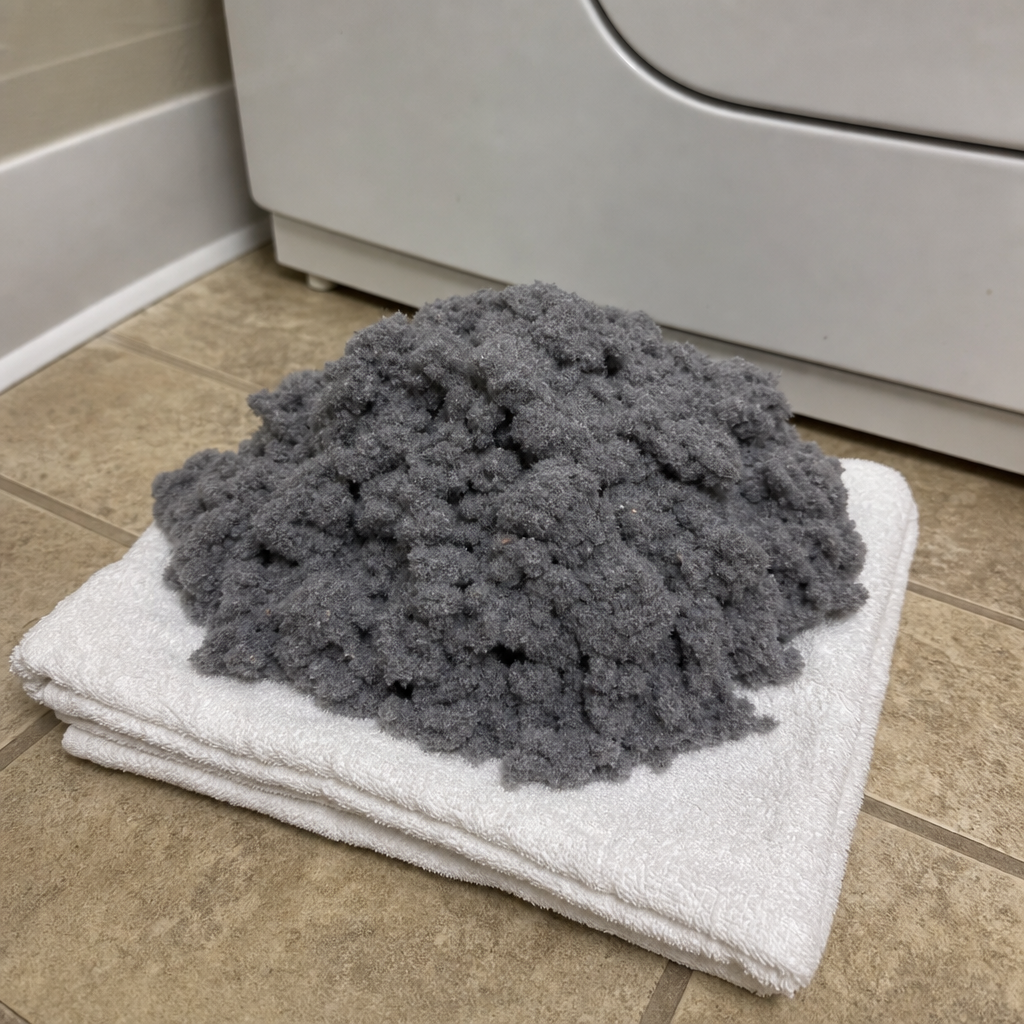
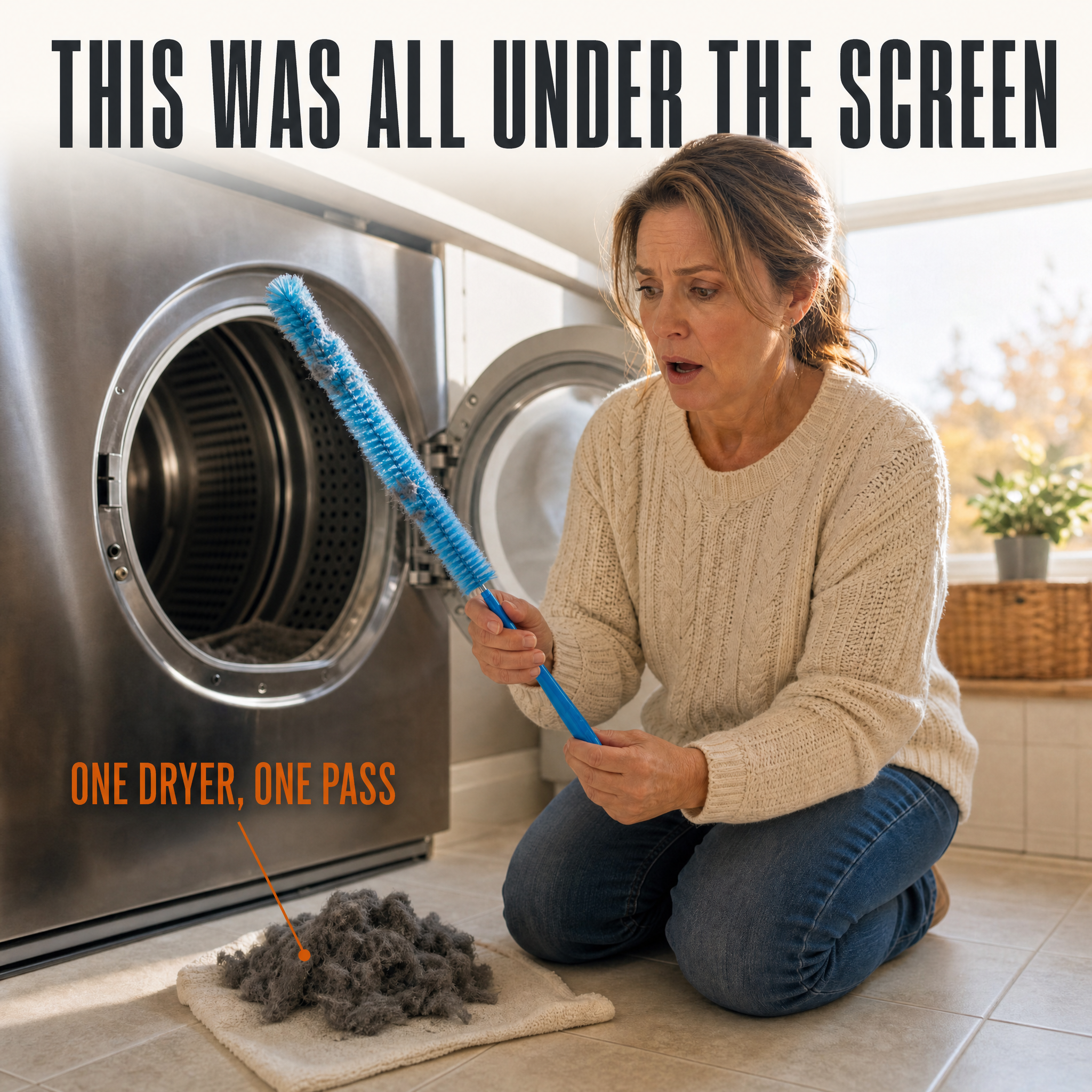
Tap a clip to see the kit. Unplug the dryer before cleaning.
They All Thought They Kept Their Dryer Clean
Verified buyer reviews of this style of flat dryer-vent attachment, in their own words.
“a deep fear of my house catching fire”
I have a deep fear of my house catching fire due to not cleaning out the dryer lint
“Mine doesn't seem that dirty”
If you're looking at your dryer and thinking, "Mine doesn't seem that dirty," that's exactly what I thought too.
“a whole coffee can full”
my first use of just in the dryer I got a whole coffee can full of lint that was stuck in the bottom you could not access
“I haven't vacuumed out my dryer ever”
I haven't vacuumed out my dryer ever and there was a substantial amount of lint removed.
“after a friend had a dryer vent fire”
Now I do it once a month, after a friend had a dryer vent fire and it took 12 months to get everything fixed.
“makes me feel so much safer”
Knowing that my dryer and vent are much cleaner makes me feel so much safer
Today: Up to 60% Off | 60-Day Money-Back Guarantee
Click the button above to check current availability and whether today's discount is still running.
60-day money-back guarantee · Uses the vacuum you already own
The 60-Day “See What Is Actually Down There” Guarantee
Run it once on your own machine. Unplug the dryer, pull the screen out, and give the cavity underneath a pass with the vacuum that is already in your house. Whatever comes out of there is your answer, and you have it on the first pass.
If it is not right for your setup, Ridge & Cellar Co gives you 60 days to request your money back.
Nobody can sell you a guarantee against a fire. What you can buy is a look at the part of your dryer you have never been able to see.
Common Questions
Will it fit my dryer and my vacuum?
The flat hose is made for the narrow cavity under a removable lint screen, and the stretch sleeve rolls over a household vacuum hose and holds by tension. Very wide or unusually shaped hose ends may not fit, so check the connection before you use it.
How hard is it to actually use?
Unplug the dryer, pull the lint screen out, feed the flat hose into the slot and run your vacuum. There is no disassembly and nothing to take apart. Stop if you meet damage or a blockage that needs professional service.
How is this different from the dryer brush I already own?
A brush is genuinely good at what it does, which is loosening packed lint and sweeping the round, reachable section behind the machine. This kit includes brushes for exactly that. The difference is the flat hose, which puts your vacuum's suction into the flat cavity under the screen and carries the lint out instead of moving it around.
I clean the lint screen after every load. Is that not enough?
It is the right habit and it is worth keeping. It just is not the whole path. The screen is the part the manufacturer gave you access to, while CPSC's warning is about lint that has built up, restricting airflow and creating excessive heat. The cavity below the screen is where that buildup collects, and it is the part no routine reaches.
What if I clean it and there is barely anything in there?
Then you have your answer for the cost of one pass, and you can send the kit back. Ridge & Cellar Co gives you 60 days to try Deep Reach at home and request your money back if it is not right for your setup.