Knee protection / Updated April 26, 2026

5 Best Knee Protection Options for Hands-On Jobs: Ranked Best to Worst

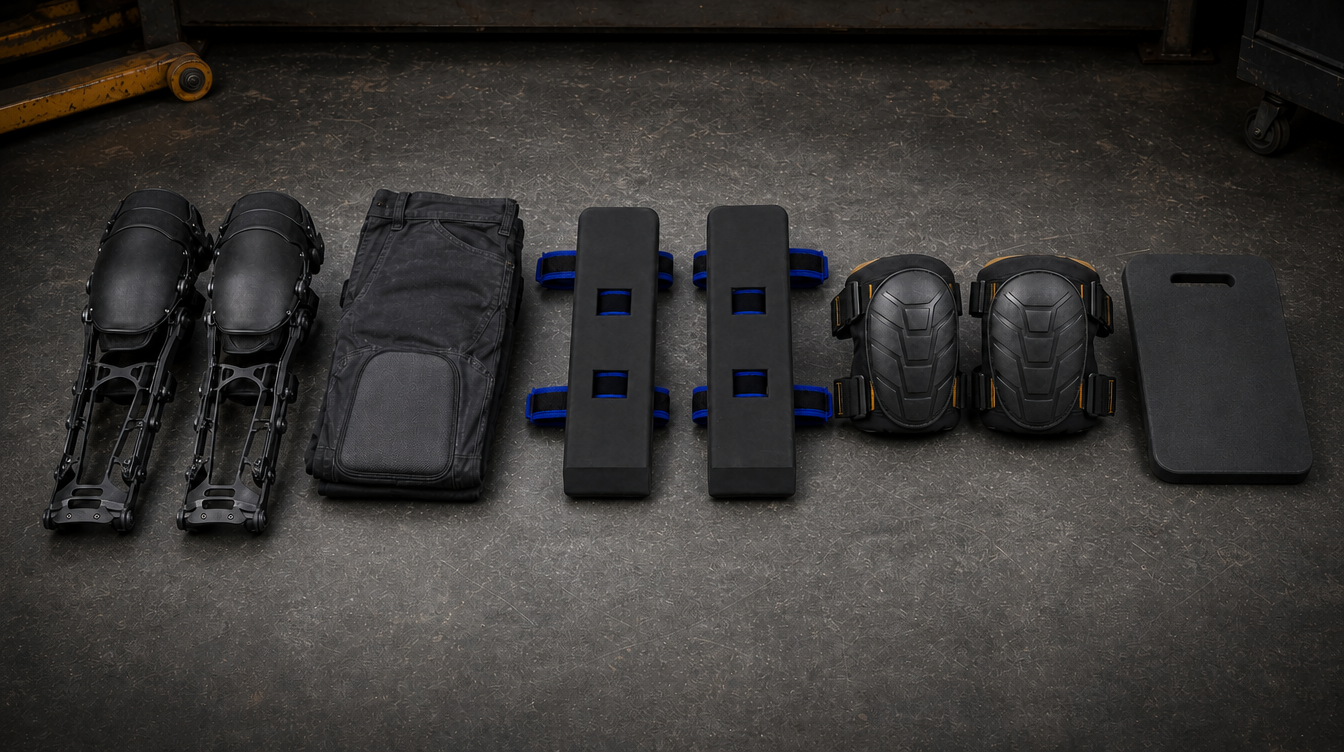
Five representative knee-protection forms arranged together on a workshop bench
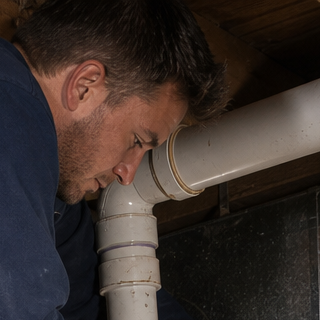
Mike working in a crawlspace while wearing knee-to-shin protection
Written byMike Dalton

Renovation worker and practical gear tester

I used to treat sore knees and scraped upper shins as part of ground-level work. Standard knee pads covered the center of my kneecap, but the job kept finding the exposed area below them: timber, concrete, gravel, and bare floor.

That sent me looking beyond the familiar short pad. I compared a kneeling mat, pad-pocket trousers, hard-cap pads, custom professional shells, and a longer knee-to-shin shell. I wanted the option that covered the real contact area, followed the job, and did not demand a specialist fitting.

What I Looked For:

These were the six things that mattered:

  • Knee and upper-shin coverage
  • Protection that followed me through the job
  • Fit across timber, concrete, gravel, and dirt
  • Bulk and setup
  • Fit and commitment
  • Overall value for a working kit

The winner was the form I kept reaching for across attic, crawlspace, garden, garage, painting, and renovation work.

Five forms compared

Here is how the five forms rank

Every score uses the same six criteria above.

1. Knee-to-Shin Crawl Shell – 9.7
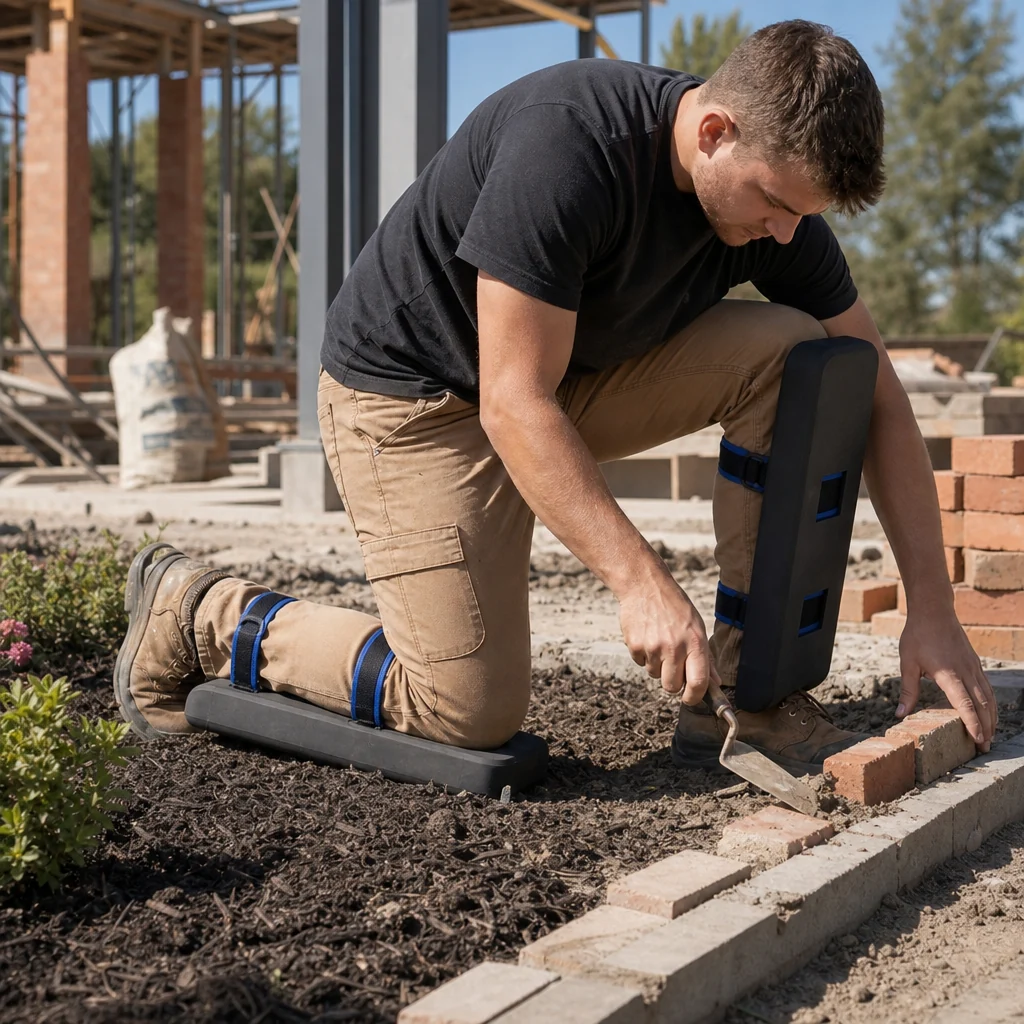
Knee-to-Shin Crawl Shell worn from the knee down the upper shin while setting brick edging outdoors

The Knee-to-Shin Crawl Shell was the clear winner, and honestly, it wasn't close.

By the time I reached it, I had compared the basic mat, pad-pocket trousers, the short hard-cap form I already knew, and the kind of custom-fit professional shell built for full-time flooring. I knew what each option solved, and I knew exactly what they left exposed.

The job that made the difference clear was crawlspace plumbing: one knee planted, the other foot forward, and my upper shin bearing against the ground as I reached toward a pipe. A short cap would have covered only the kneecap. The Crawl Shell extended across both contact points.

The first thing I noticed was not extra padding. It was the shape. The shell started over the knee and kept running down the upper shin, with a foam base extending toward the ankle. For painting, attic, crawlspace, garden, garage, and renovation work, that wider protected zone made more sense to me than a small cap built around one joint.

It was also the simplest long-shell option in the comparison. Each pad used a PE shell, a foam base, and two adjustable wrap straps. There was no dedicated trouser to buy and no professional fitting process to arrange. It was a two-pad set I could keep with the rest of my working kit.

That was the difference. A mat worked when the job stayed in one place. Pocket trousers kept the pad low profile. A short hard cap handled direct kneecap contact. A custom professional system made sense for a flooring career. The Crawl Shell was the option that matched the mixed, moving work I actually do.

Why the form stood out:

Most familiar knee pads concentrate everything over the kneecap. That can work for a clean, direct kneel, but it leaves the top of the shin outside the shell. The Crawl Shell treats the knee and upper shin as one protected zone.

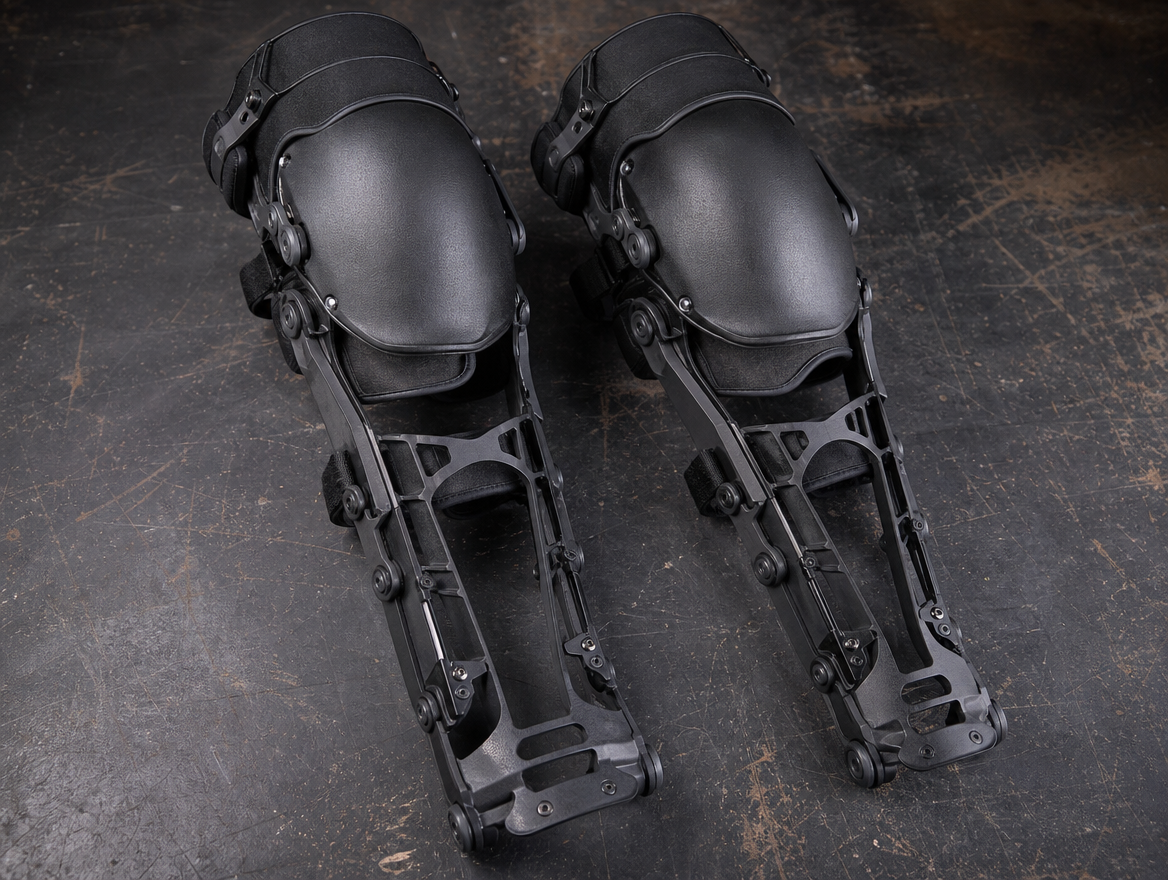
The confirmed dimensions are 49.5 × 16 × 5.5 cm in the supplied order. That long form is the point: it extends past the knee instead of stopping at it. The pair is backed by a lifetime warranty.

For me, this was the easiest option to rank number one. It gave me the practical knee-to-shin coverage I wanted without asking me to build my work clothes or my budget around a specialist system.

Best for
Attics, crawlspaces, garden rows, garage work, and other jobs that keep moving across the ground
What stands out
PE shell, foam base, two adjustable wrap straps on each pad, and two pads in the set.
Tradeoff
More dedicated than a pocket insert and more equipment to wear than a mat placed on the floor.
Form check

The long PE shell covers the knee and upper shin. Two wrap straps secure each pad to the lower leg, while the foam base extends toward the ankle.
Overall Rating: 9.7/10

See why this was my top pick

2. Custom-Fit Professional Shin-Support Shells – 9.2

Representative custom-fit professional knee and shin support shells on a workbench

This was the professional benchmark, with the highest fitting commitment in the group.

If I spent every day laying flooring, this is the route I would take seriously. A representative system such as the ProKnee 0714/0714E spreads the form down the shin, offers multiple lengths and knee-seat widths, and can be rebuilt with replacement parts. I ranked it second because the protection is substantial, but the custom measurement and specialist setup are more system than many attic, garden, garage, and weekend jobs require.

Best for
Full-time floorlayers who want measured fit, rebuildable parts, and a professional support system
What stands out
True shin-support architecture, multiple fit dimensions, and replaceable components.
Tradeoff
Specialty fitting, higher purchase friction, and a form aimed at sustained professional kneeling.
Form check

Representative ProKnee 0714/0714E specifications list 18 lengths, two knee-seat widths, a shin-support system, and replaceable parts.

3. Knee-Pad Work Trousers – 8.4

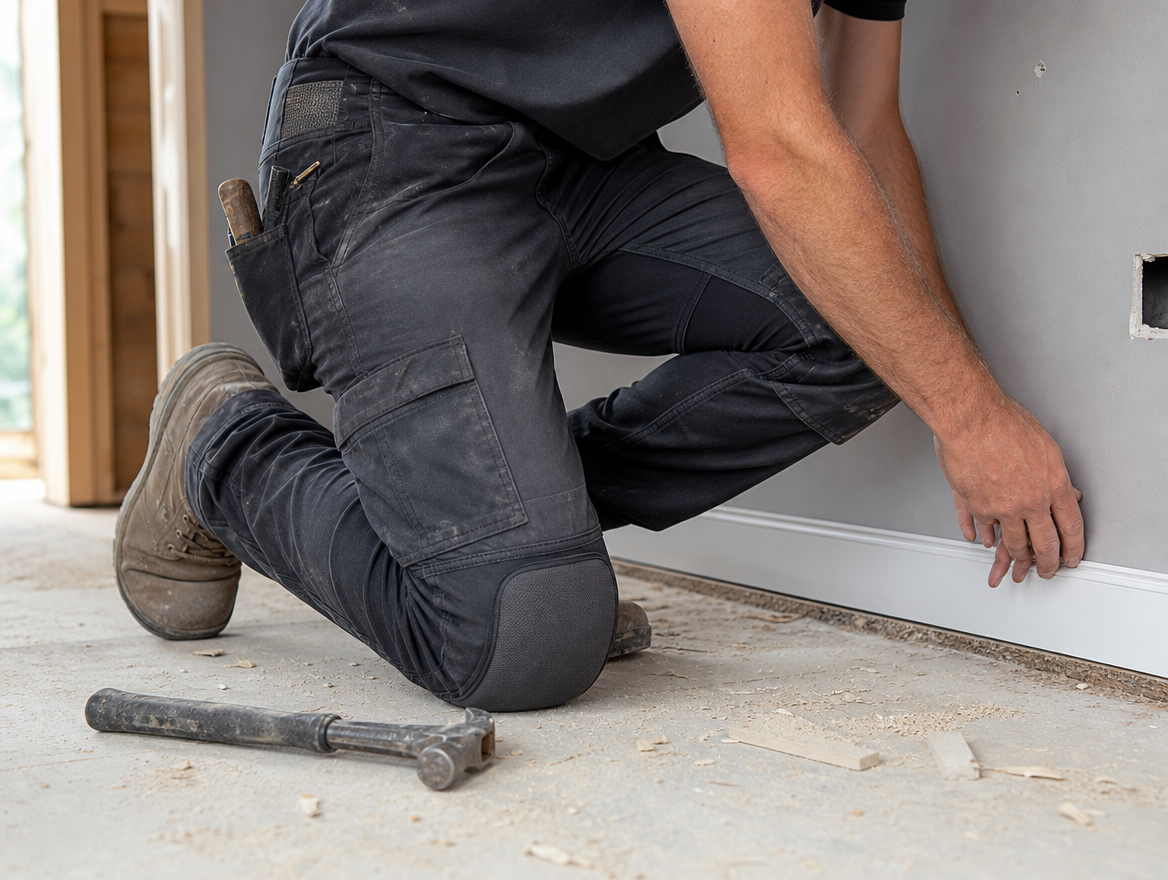
Representative work trousers with low-profile pads fitted inside reinforced knee pockets

I liked the clean integration, but the protected zone stayed centered on the knee pocket.

I liked that pocket systems solved the loose-accessory problem by building the pad into compatible trousers. Snickers Workwear, for example, pairs dedicated pads and trouser pockets through its KneeGuard and SquareFit systems. The trade was that the correct trouser size and length helped decide where the pad sat, and the pocket still protected my knee rather than extending a shell down my shin.

Best for
Tradespeople who already buy compatible work trousers and want the pad integrated into their clothing
What stands out
Low-profile wear, no separate straps around the leg, and protection ready whenever the trousers are on.
Tradeoff
Requires compatible trousers and correct garment length; coverage remains concentrated at the knee.
Form check

Representative pocket systems pair matching pads and trousers, with position tied to the fit and length of the workwear.

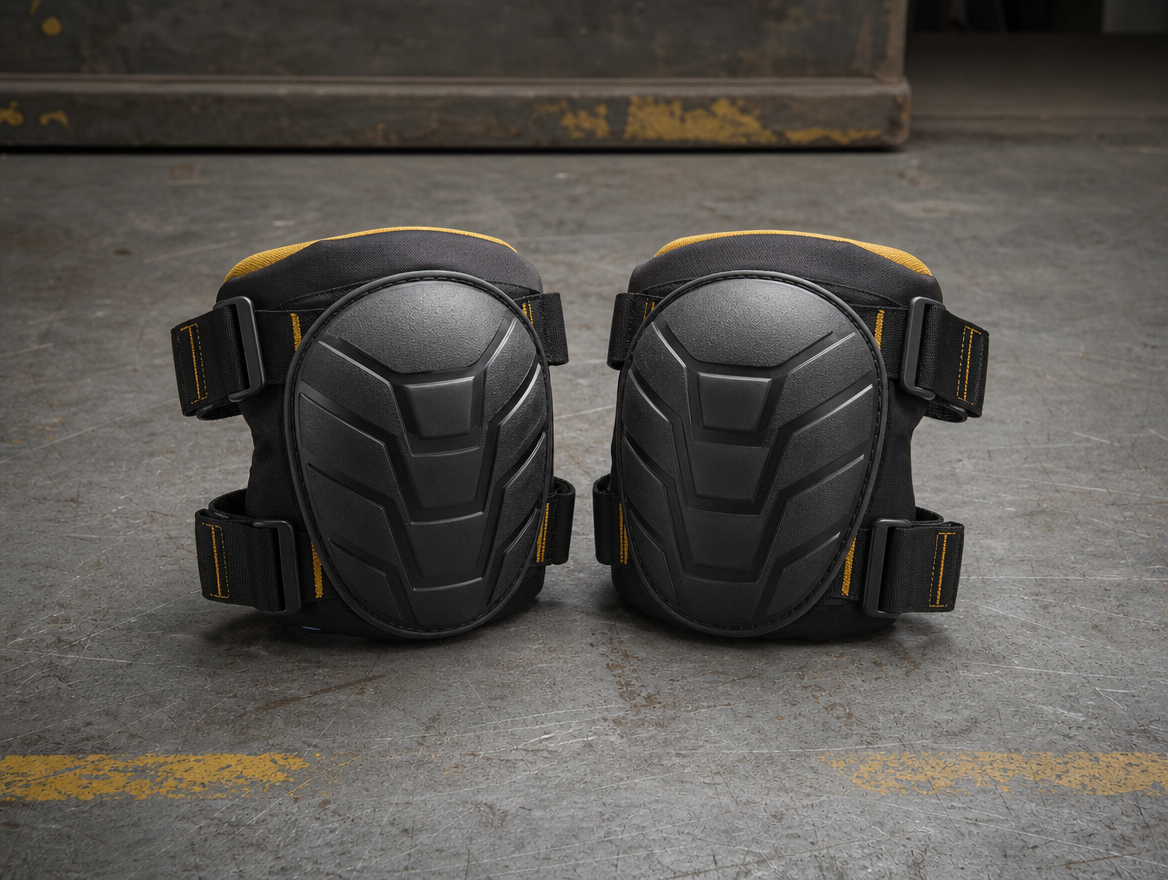
4. Strapped Hard-Cap Knee Pads – 7.7

Representative pair of short strapped hard-cap knee pads on a steel workbench

This was easy to understand and familiar to wear, but its protected area was still built around one joint.

This was the form I already knew. A representative pair combines a rigid cap, molded foam, and adjustable straps. That made sense for direct kneecap contact. I ranked it below trousers and long shells because the physical form stopped close to my knee and left my upper shin outside the protected zone I cared about.

Best for
Familiar jobsite kneeling when the main requirement is a rigid cap over the kneecap
What stands out
Rigid cap, common retail availability, quick adjustment, and a familiar jobsite form.
Tradeoff
Knee-only coverage with straps crossing around a joint that bends throughout the job.
Form check

DEWALT's representative hard-shell pair uses a rigid hybrid cap, molded foam, a gel zone, and dual straps.

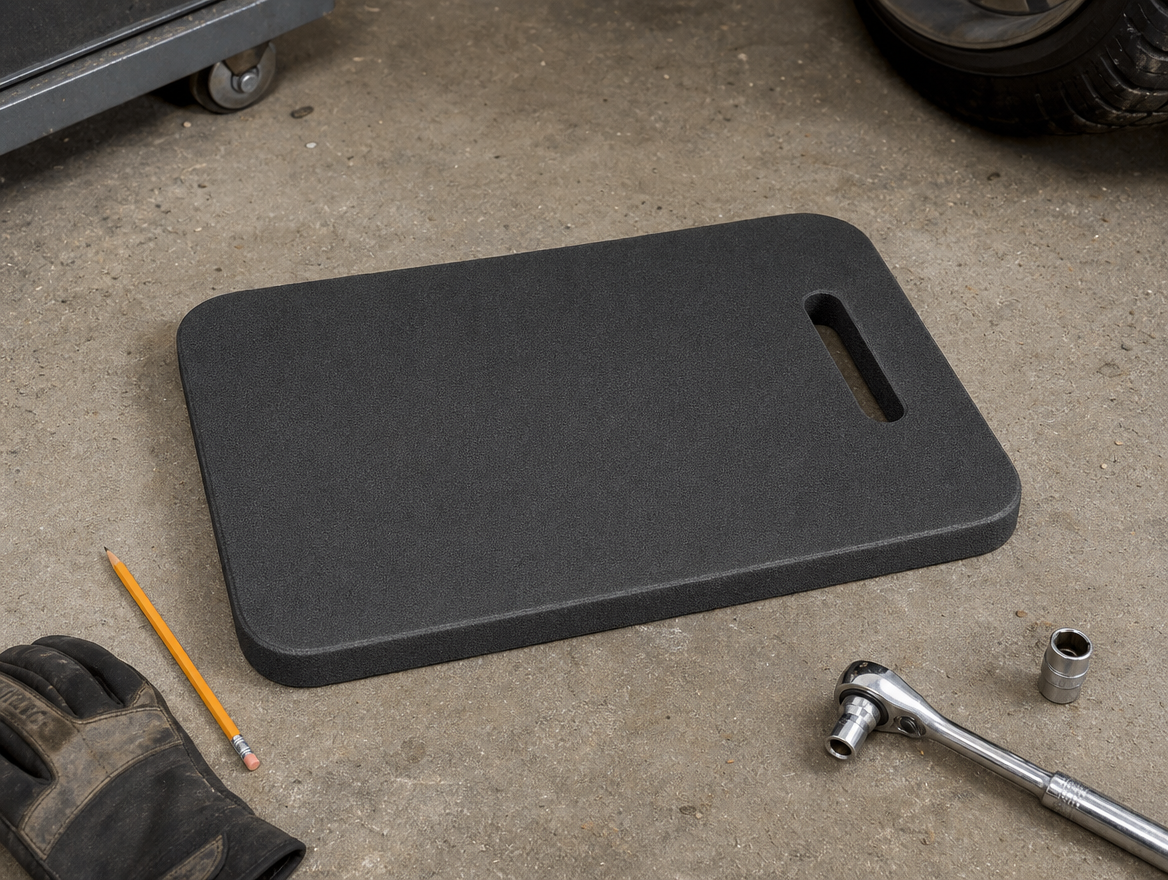
5. Portable Kneeling Mat – 6.9

Representative portable black foam kneeling mat on a concrete garage floor

This was the simplest choice when the task stayed put, and my weakest match when the work kept moving.

The mat was the easiest option to understand. I placed it once and both knees had a broad foam surface with no straps or fitting. That simplicity is exactly why it won stationary work. I ranked it last for jobs that kept shifting because it did not attach to me, did not cover my shin, and had to be carried or reset when the task moved along the room, row, or work area.

Best for
Stationary work in one small area, including a sink cabinet, garden bed, or garage bay
What stands out
Low purchase friction, no fit decision, no straps, and a broad stationary kneeling surface.
Tradeoff
No shin coverage and no ability to follow the wearer without being picked up and moved.
Form check

Representative retail mats are thick closed-cell foam rectangles designed to stay on the surface rather than attach to the body.

Final verdict

The one I kept reaching for

If my job stayed in one spot, I would use a mat. If I spent every workday laying floors, I would seriously consider a custom-fit system. For the painting, attic, crawlspace, garden, garage, outdoor, and renovation work I actually move through, the Knee-to-Shin Crawl Shell was my clear winner because it covered my knee and upper shin while carrying a long base toward my ankle.

Knee and upper-shin coverage. PE shell. Foam base. Two adjustable wrap straps per pad. Lifetime warranty.See the knee-to-shin shells